
Proper subsurface drainage is one of the highest-return investments a farming operation can make — but only if it’s installed accurately. Soil-Max tile plows are built to install drainage systems efficiently, precisely, and with minimal maintenance. Farm X sells and ships Soil-Max equipment to growers worldwide.
The biggest practical difference between a tile plow and a trencher is maintenance. Trenchers have many moving parts — chains, teeth, drive systems — and require constant attention to stay productive. A tile plow is a far simpler machine: it uses a shank to lift and place the soil, with fewer components to wear and fail.
That means more time in the field and less time in the shop. For operations installing significant acres of tile, that difference compounds quickly over a season.
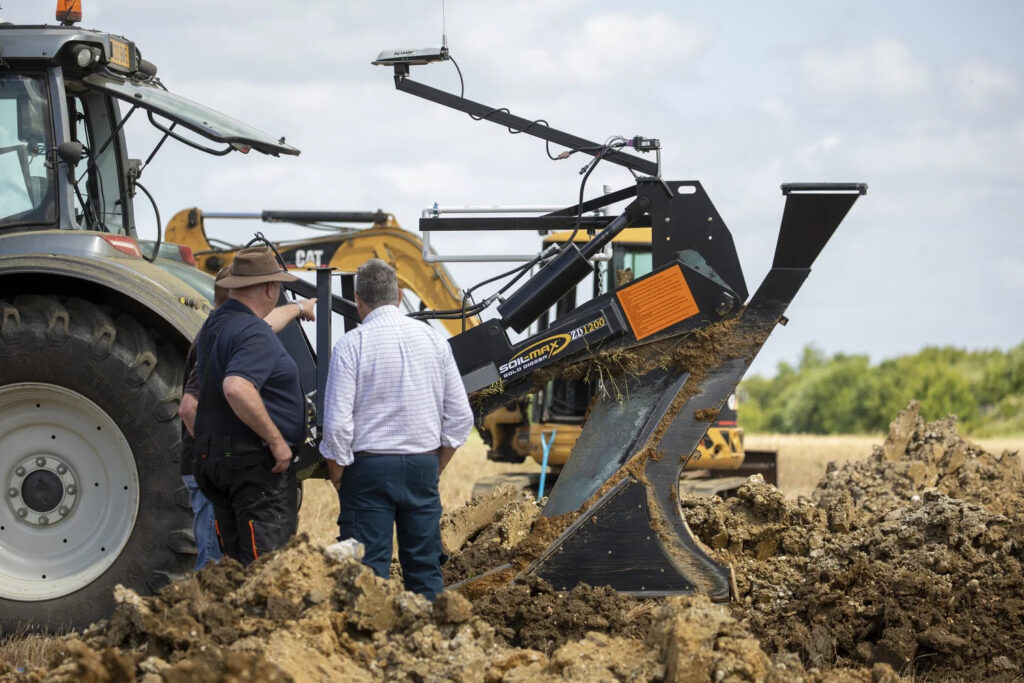
Every machine we carry has been evaluated for performance, durability, and real-world results in the field. We sell direct to growers worldwide — with teams in the US, Australia, and the UK, and partners across more than 20 countries.
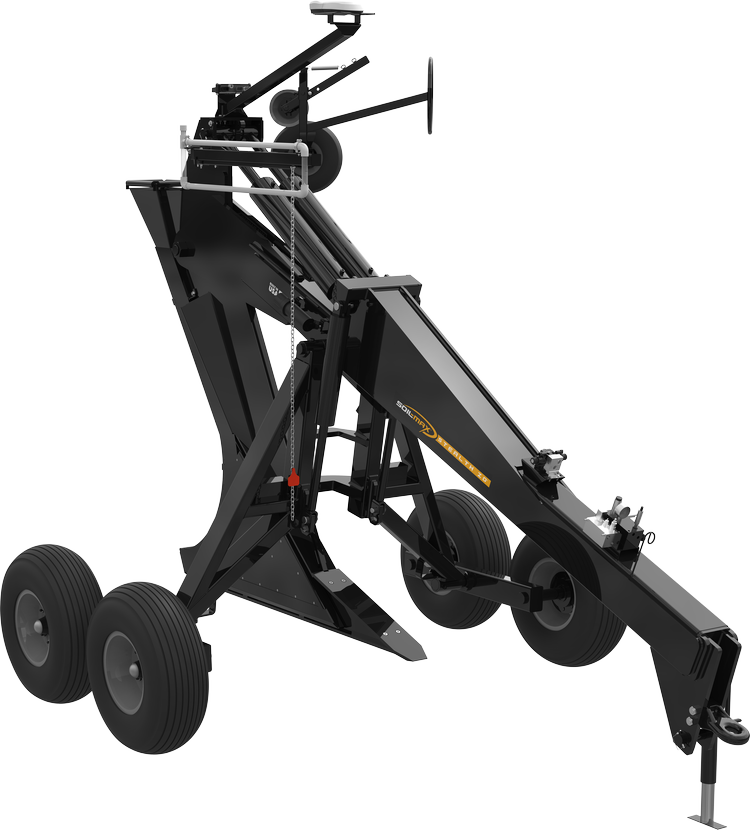
Best for: Large operations with heavy tractors installing wide tile.
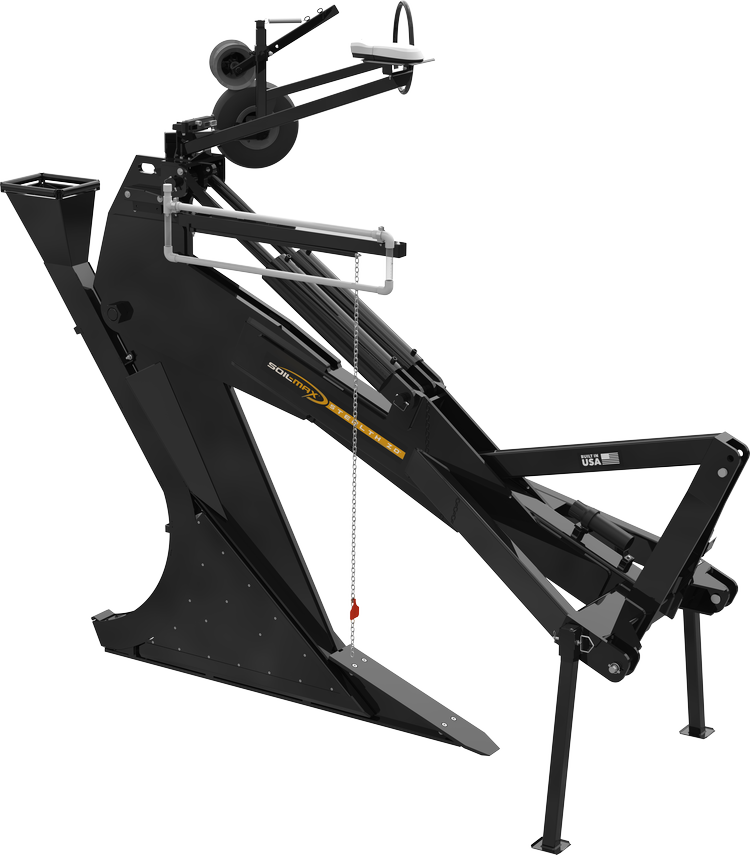
Best for: Mid-size operations wanting the versatility of a 3-point mount.
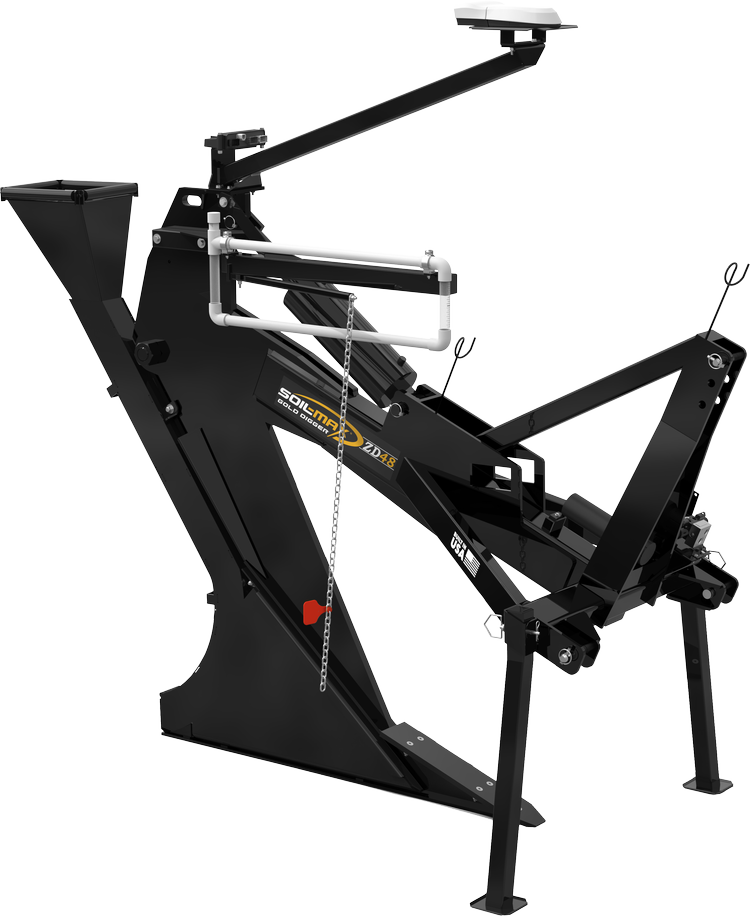
Best for: Smaller operations or contractors installing lighter tile in tighter conditions.
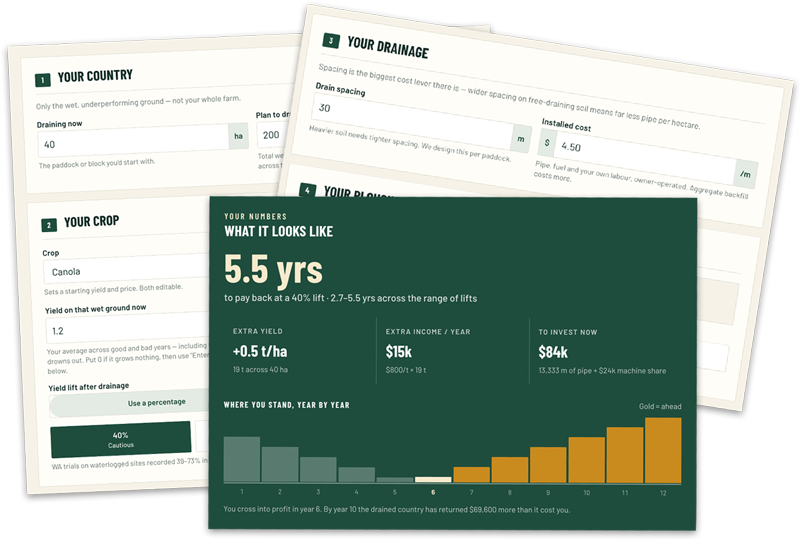
Enter your numbers in our ROI Calculator to estimate the return on a tile drainage investment. To gain access, submit your email below!
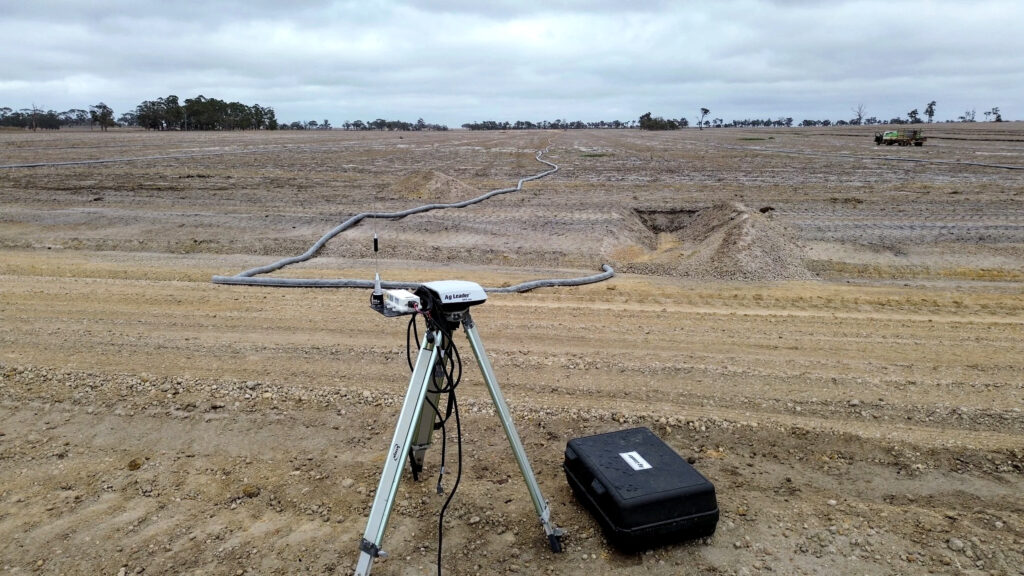
Soil-Max tile plows are compatible with Intellislope Grade Control — an RTK GPS-automated system that adjusts plow depth in real time to maintain survey-grade accuracy across your entire field. When the goal is accurate tile drainage placement, Intellislope is worth a serious look.
A: A trencher uses a rotating chain and teeth to cut a trench, then places tile into it. It has many moving parts and requires regular maintenance to stay productive. A tile plow is mechanically simpler — it uses a shank to lift the soil and place tile in one pass, with far fewer components to wear or fail. For operations focused on productive uptime and lower long-term maintenance cost, the tile plow is almost always the better choice.
A: It depends on the model. The Stealth ZD pull-type requires a minimum 11-ton (25,000 lb) tractor. The ZD1600 3-point requires 9 tons (20,000 lbs). The ZD1200/ZD48 can be run with a 4.5-ton (10,000 lb) tractor. If you’re unsure which model suits your equipment, reach out and we’ll work through it with you.
A: Soil-Max plows are compatible with Intellislope Grade Control, which integrates with most RTK GPS brands to automate plow depth adjustments in real time. Contact us to discuss compatibility with your specific system.
A: Yes. Farm X sells and ships Soil-Max equipment worldwide. We handle any export preparation that may be needed. We’ll confirm what shipping and support look like in your specific market before you purchase.
A: In the UK, Tony Bullock hosts field days where you can see the equipment in real conditions before committing. Email Tony to ask about upcoming events. In Australia, Simon Klopper hosts fields days. You can email Simon about upcoming AU events. For other regions, reach out and we’ll let you know what demonstration options are available.
Whether you’re planning a new tile system, adding to an existing one, or sourcing equipment for a contracting operation — reach out. We’ll work through the right model for your field conditions, tractor size, and budget.