
Tile drainage is one of the most effective water-management tools available to modern farmers, yet plenty of first-time buyers aren’t sure exactly what it is or how it works. Here’s what you need to know before you invest.
What Is a Drainage Tile?
A drainage tile is a perforated pipe — almost always durable plastic today, though clay tile was the original standard — installed beneath a field to intercept and carry away excess water. Buried in a network of lines, these tiles collect groundwater and surface moisture and route it toward an outlet, keeping the root zone from staying saturated.
How Tile Drainage Works
Installing a system means digging trenches at a planned depth and spacing, laying the perforated pipe, and backfilling. Water moves into the tile through the perforations and flows by gravity to a main line and then an outlet — a ditch, tile main, or control structure. Getting the depth, spacing, and slope right is what separates a system that performs for decades from one that under- or over-drains.
Why Farmers Install Tile Drainage
- Healthier soil — better aeration and moisture balance support root development
- Higher yields — fields dry out in time for planting and avoid mid-season root rot
- Less erosion — less standing water means less surface runoff
What to Weigh Before You Invest
- Upfront cost — installation is a real investment, even when you install it yourself
- Ongoing upkeep — lines need periodic inspection and occasional repair
- Nutrient management — a poorly designed system can carry nutrients off-field, so layout and maintenance matter
Ready to Install Your Own System?
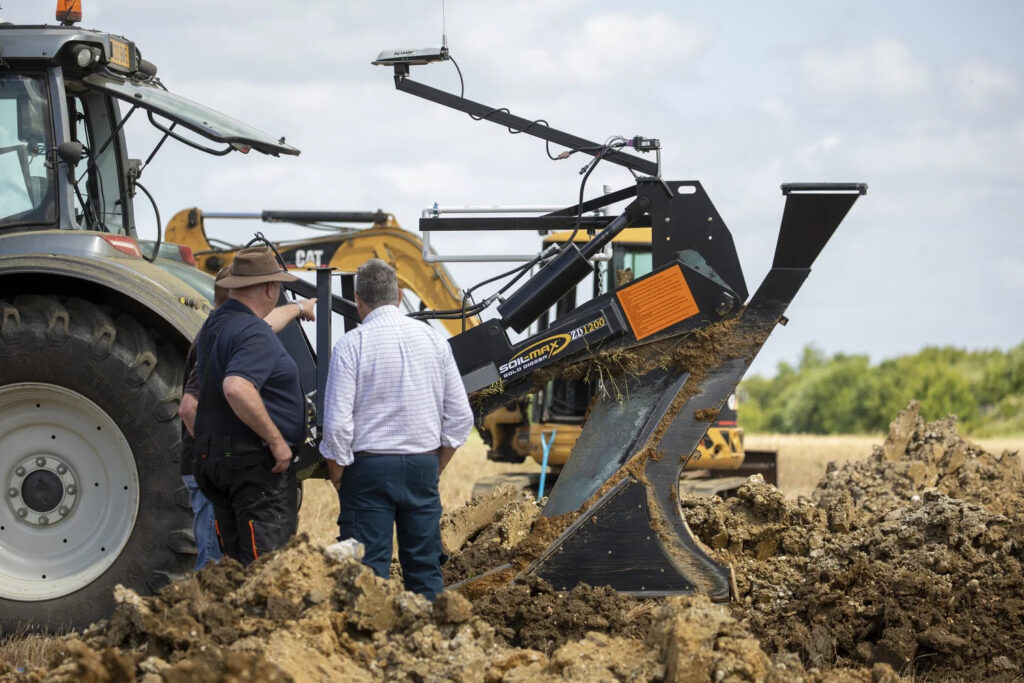
Farm X manufactures the Soil-Max tile plow, giving farmers the equipment to install and maintain their own drainage system instead of paying contractor rates every season. Talk to our team about which plow fits your acreage and soil type.