
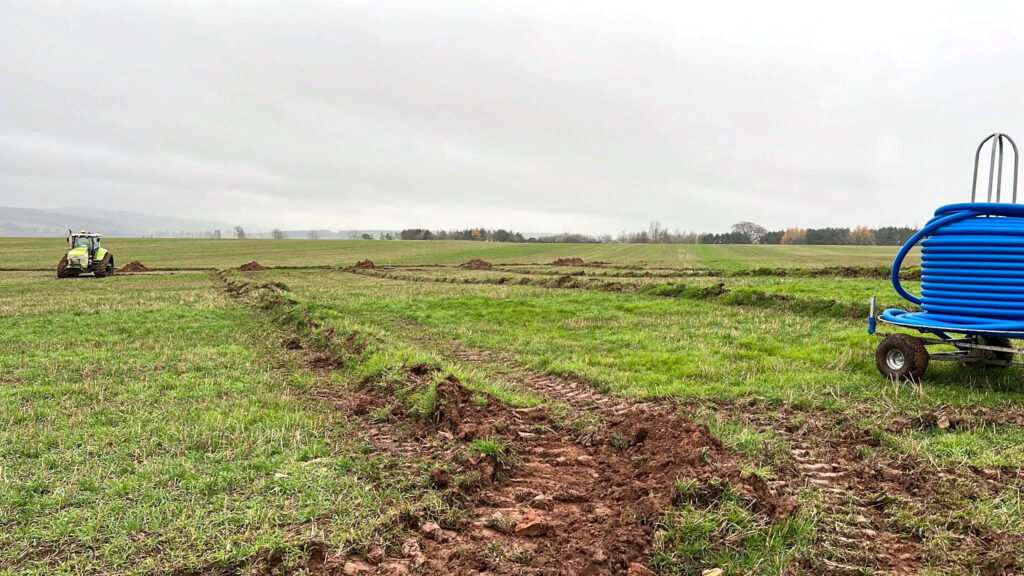
Agricultural drainage is a fundamental tool for controlling field water levels, improving soil conditions, and boosting productivity — but getting the spacing, depth, and return on investment right is what determines whether a system performs for decades or underdelivers.
Part 1: Getting Spacing Right
Proper spacing ensures efficient water removal without waterlogging or over-drainage. Soil type drives most of the decision — clay soils need closer line spacing, sandy soils can go wider — while the crops grown and the field’s topography also factor in. Drainage coefficient, hydraulic conductivity, and water table depth are the technical inputs used to calculate exact spacing.
Part 2: Getting Depth Right
Installation depth determines how effectively a system removes excess water while protecting crop roots and groundwater. Lines are typically positioned 3 to 4 feet deep to stay clear of the root zone, with soil characteristics and local regulations on drilling depth both factoring into the final number.
Part 3: Calculating ROI
Weigh installation costs — equipment, materials, and labor — against expected yield increases and current crop pricing, then factor in ongoing maintenance. Comparing total costs to expected returns gives you a payback period and an annual profit estimate you can use to evaluate the investment with confidence.
Work the Numbers with Farm X
Proper tile drainage is an essential piece of efficient farming. Getting the spacing and depth right — and running the ROI numbers before you commit — ensures the investment pays off for your specific fields.